Cleanliness Testing Solutions for Aerospace & Defense Componnets
Industry Overview: Why Component Cleanliness Matters
Aerospace and defense equipment operates under demanding conditions, where component reliability, dimensional accuracy, and system performance are essential. Aircraft hydraulic systems, fuel delivery systems, propulsion equipment, flight-control mechanisms, precision actuators, and spacecraft hardware all depend on carefully controlled manufacturing and assembly processes.
Technical cleanliness testing provides measurable information about particulate contamination on or inside components. It helps manufacturers evaluate cleaning effectiveness, monitor production processes, and maintain inspection records for quality assurance and supplier management.
Applicable Aerospace & Defense Components
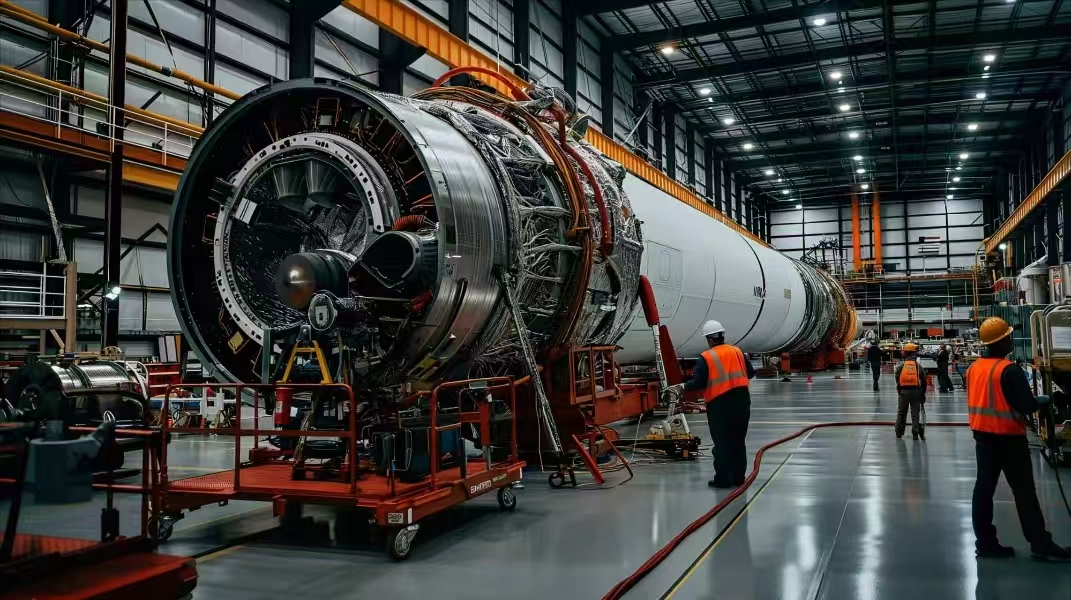
Cleanliness inspection may be required for a range of precision components used in aircraft, defense equipment, and space systems. The actual inspection scope should be determined according to component function, material, geometry, operating environment, and customer specifications.
Aircraft and aerospace components
l Hydraulic valve bodies, manifolds, and actuator components
l Fuel system components, pumps, valves, and precision fittings
l Landing gear hydraulic components and machined housings
l Engine and propulsion system precision-machined parts
l Gearboxes, transmission components, and mechanical assemblies
l Tubes, connectors, and fluid-control components
Space and satellite hardware
l Propulsion system components and fluid-control assemblies
l Precision-machined housings and structural components
l Thermal control system components and fluid passages
l Valves, fittings, and internal flow-channel components
l Ground support equipment and selected hardware interfaces
Defense equipment and precision assemblies
l Hydraulic and pneumatic control components
l Precision actuators and mechanical transmission parts
l Machined housings, manifolds, and valve assemblies
l Precision connectors and selected equipment enclosures
l Components with narrow passages, blind holes, or complex internal cavities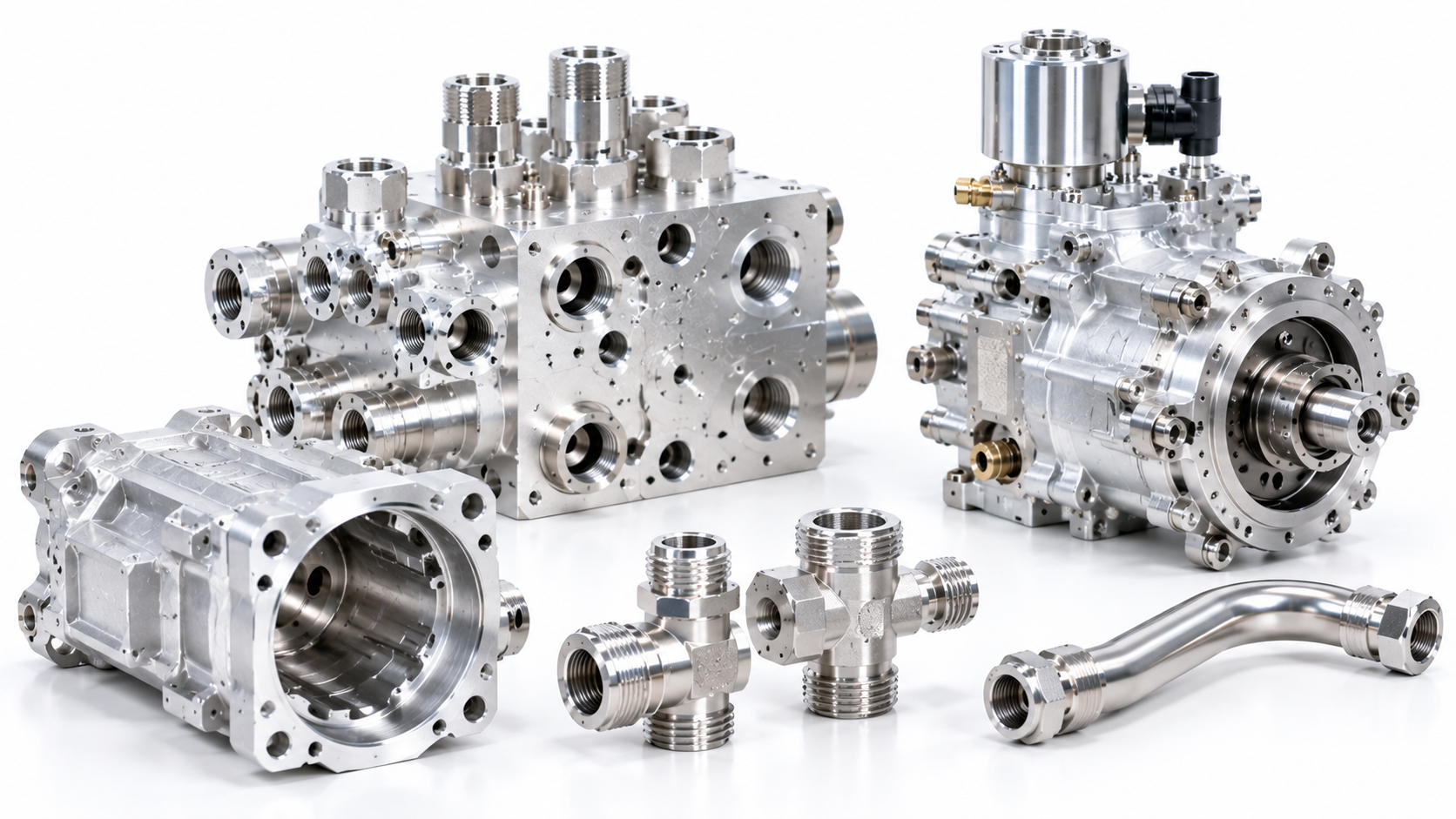
Common Sources of Particle Contamination
Aerospace and defense components often involve complex machining operations, precision assembly, and demanding cleanliness requirements. Particulate contamination can be introduced at different manufacturing and handling stages.
l Precision machining and material removal
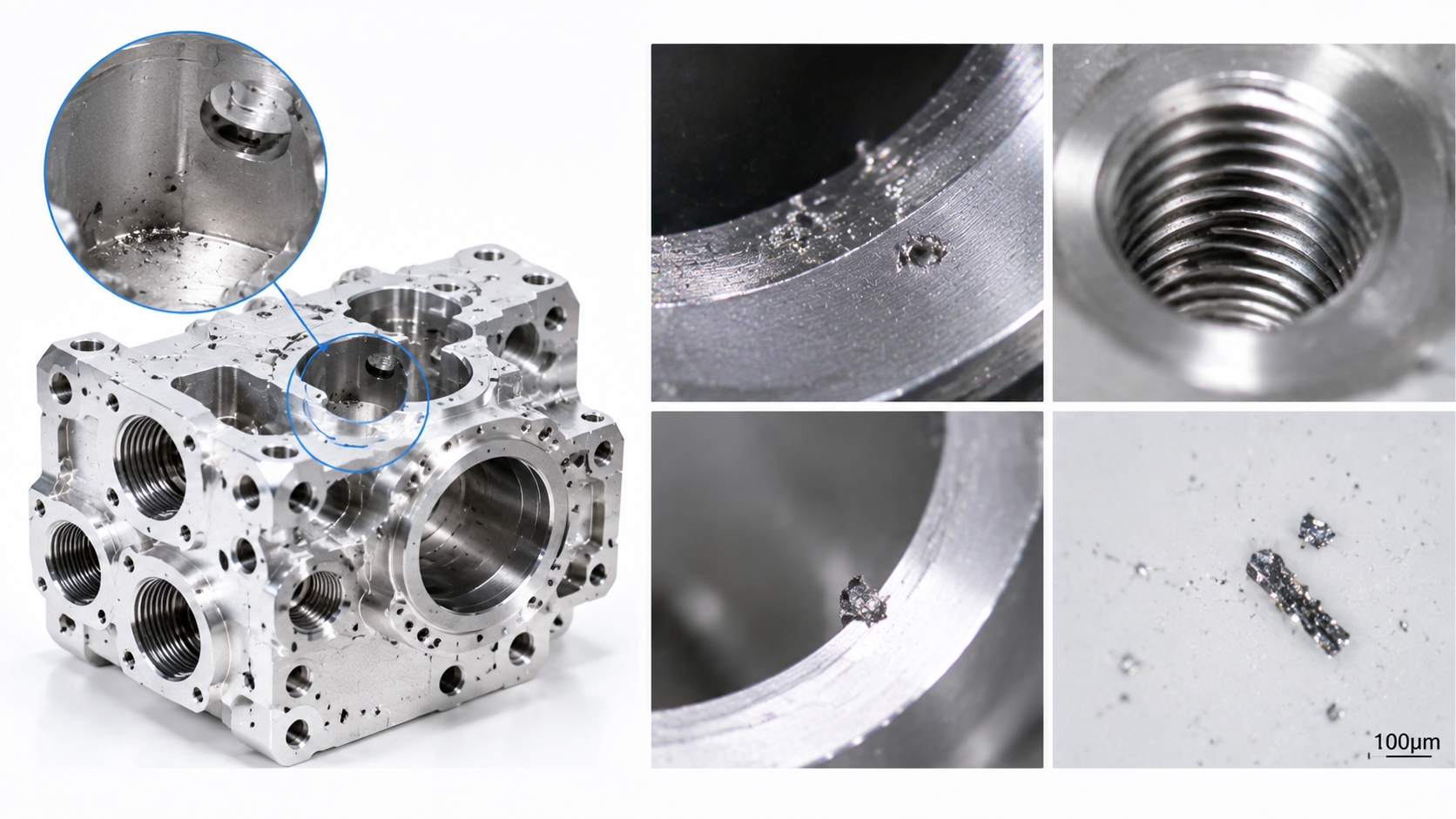
Turning, milling, drilling, grinding, honing, and reaming can generate metal chips, fine swarf, burrs, and abrasive particles. These contaminants may remain in deep holes, cross-drilled passages, grooves, threads, and internal cavities.
l Deburring and surface finishing
Mechanical deburring, polishing, lapping, and abrasive finishing may leave loose particles or fragments if subsequent cleaning is insufficient. Residues can be particularly difficult to remove from components with narrow passages and complex internal structures.
l Welding, brazing, and joining
Welding spatter, metal particles, oxide residues, and debris from joining operations may remain around joints, internal surfaces, or adjacent machined areas. These residues may become additional contamination sources during later assembly or operation.
l Cleaning and rinsing processes
Inadequate cleaning parameters, incomplete rinsing, or insufficient drying may leave residual particles or deposits on components. Cleaning methods must be compatible with the component material, surface treatment, and design requirements.
l Assembly, maintenance, and handling
Particles may be introduced through tools, fixtures, gloves, packaging materials, maintenance activities, or the surrounding working environment. Components that have already passed cleaning may become contaminated again if handling and storage controls are insufficient.
For aerospace and space hardware, contamination control may also include molecular residues, non-volatile residues (NVR), and other forms of contamination. These require appropriate test methods and should not be treated as equivalent to particulate cleanliness inspection.
Why Aerospace Component Cleanliness Testing Is Necessary
In aerospace and defense applications, component cleanliness is closely related to manufacturing quality and system reliability. Particles may create problems in components where precise movement, controlled fluid flow, or close-fitting surfaces are required.
For example, particulate contamination in hydraulic valve assemblies or actuator components may interfere with small clearances or sensitive moving parts. Particles in fuel system components may restrict small passages or affect the operation of precision valves. In propulsion and thermal-control systems, residual particles inside fluid passages may affect flow conditions or contribute to downstream contamination.
For spacecraft hardware and other contamination-sensitive assemblies, particulate control is also important during fabrication, cleaning, integration, storage, and handling.
Applicable Cleanliness Standards and Industry References
Aerospace and defense applications cover a wide range of products, from aircraft components and ground support equipment to spacecraft hardware. There is no single universal particulate cleanliness standard that defines acceptance limits for every component in these industries.
The applicable requirements should be selected according to the product type, project specifications, contamination sensitivity, and customer or contract requirements.
IEST-STD-CC1246E – Product Cleanliness Levels: Applications, Requirements, and Determination
IEST-STD-CC1246E provides a framework for specifying and determining cleanliness levels for contamination-critical products. It addresses particulate and molecular residue contamination on surfaces and in liquids, with an emphasis on contaminants that may affect product performance and reliability.
ECSS-Q-ST-70-01C Rev.1 – Cleanliness and Contamination Control
Published by the European Cooperation for Space Standardization (ECSS), ECSS-Q-ST-70-01C Rev.1 defines cleanliness and contamination-control requirements for space projects.
It covers the identification of contamination-sensitive and contamination-critical items, the definition of cleanliness requirements, and contamination-control management throughout project phases, including design, development, production, testing, operation, launch, and mission activities.
For spacecraft, satellite hardware, and related ground support equipment, this standard provides an important reference for establishing and maintaining appropriate cleanliness levels.
NASA KSC-C-123J – Surface Cleanliness of Ground Support Equipment Fluid Systems
NASA KSC-C-123J specifies surface cleanliness requirements for fluid systems used in ground support equipment (GSE) at Kennedy Space Center.
It addresses cleanliness levels and verification requirements for relevant GSE fluid-system surfaces. The specification includes particulate contamination requirements and test methods, providing a reference for controlling contamination in fluid-system hardware used in space launch and ground support operations.
Cleanliness Testing Solutions
Jetblue CleanTec provides cleanliness extraction equipment and particle analysis systems for the inspection of suitable aerospace, defense, and precision-engineered components. Equipment configuration can be discussed according to sample geometry, material, contamination characteristics, and customer inspection requirements.
Cleanliness extraction equipment
Extraction equipment is used to remove particulate contaminants from component surfaces and accessible internal areas before filtration and analysis. Depending on the sample and test requirements, suitable methods may include pressure rinsing or ultrasonic extraction.
For components such as hydraulic valve bodies, fuel system parts, precision manifolds, fittings, and machined housings, the extraction setup should be selected to reach the relevant inspection areas while maintaining compatibility with the sample.
The extraction method and parameters should be established according to the component structure and agreed test procedure. Not every aerospace component is suitable for the same extraction method.
Particle analysis systems
After extraction and filtration, particles collected on the analysis membrane can be examined using an optical microscope and particle analysis system. The system can support membrane scanning, particle size measurement, particle classification according to configured inspection requirements, and automated report generation.
These results help quality teams review particulate contamination and maintain inspection records for production monitoring and customer communication.
Customized testing requirements
Aerospace and defense components vary considerably in material, geometry, function, and cleanliness requirements. Different samples may require different extraction methods, filter specifications, analysis parameters, and reporting formats.
Jetblue CleanTec can discuss customized equipment configurations and testing standards according to the customer's component type, inspection objectives, and applicable project requirements.
CTA
Looking for a suitable cleanliness testing solution for aerospace precision components, hydraulic assemblies, fuel system parts, or spacecraft hardware?
Jetblue CleanTec can help you evaluate suitable cleanliness extraction and particle analysis equipment according to your sample characteristics and inspection requirements.
Contact us to discuss your component type, testing objectives, and applicable cleanliness standards.